:format(webp))
:format(webp))
Building Secure and Inclusive DeFi Interfaces with ReactJS
By the end of this guide, you’ll understand how to craft DeFi front ends that are safe, responsive, and accessible. You’ll learn about unique attack vectors, real-time data streaming, WCAG compliance, internationalization pitfalls, performance tweaks, and the tools you need to launch a standout ReactJS-powered DeFi app.
Understanding DeFi and ReactJS for Frontends
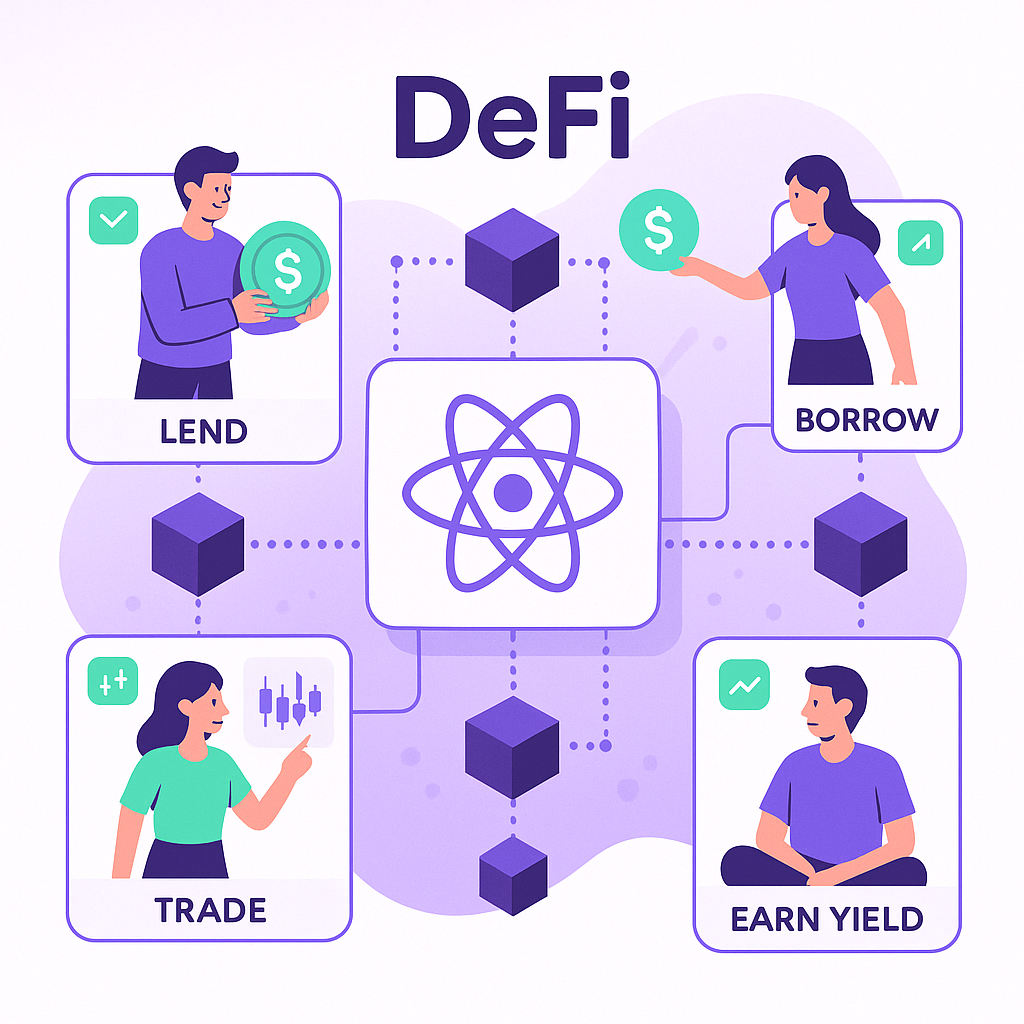
Decentralized Finance ( DeFi ) lets users lend, borrow, trade, and earn yield without intermediaries. ReactJS, with its component model and Virtual DOM diffing , has become the go-to library for building interactive dApp interfaces.
What Is DeFi?
DeFi consists of smart contracts on blockchains like Ethereum that replace banks and brokers with code you can audit.
Why ReactJS?
React’s reusable components, one-way data flow, and rich ecosystem streamline development and maintenance. Performance optimizations such as Virtual DOM diffing ensure your UI stays snappy even as on-chain data changes rapidly.
Security Challenges in DeFi UIs
DeFi front ends face all the usual web-app threats plus crypto-specific risks. A compromised UI can trick users into signing malicious transactions.
Front-End Attack Vectors Unique to DeFi
Phishing overlays that mimic wallet prompts
UI manipulation to alter transaction details
Front-running through leaked nonce or gas data
Attack Vector | Description | Mitigation Tips |
|---|---|---|
Phishing overlays | Mimicking wallet prompts to steal credentials | Always fetch contract ABI from a trusted source |
UI manipulation | Altering transaction details on the client side | Verify transaction payloads client-side |
Front-running | Exploiting leaked nonce or gas data to preempt transactions | Isolate third-party scripts using a strong Content Security Policy |
Mitigation tips:
Always fetch contract ABI from a trusted source.
Verify transaction payloads client-side.
Isolate third-party scripts using a strong Content Security Policy .
Core Considerations: Smart Contracts & Wallets
Smart Contract Interaction: Use libraries like Ethers.js to ensure correct ABI encoding.
Wallet Integration: Rely on established wallets such as MetaMask or WalletConnect rather than custom implementations.
Input Validation: Sanitize user input before sending on-chain requests.
Ensuring Real-Time Interactivity and Performance
DeFi users expect up-to-date price feeds, live transaction statuses, and smooth navigation—even under network strain.
Real-Time Blockchain Data Streaming
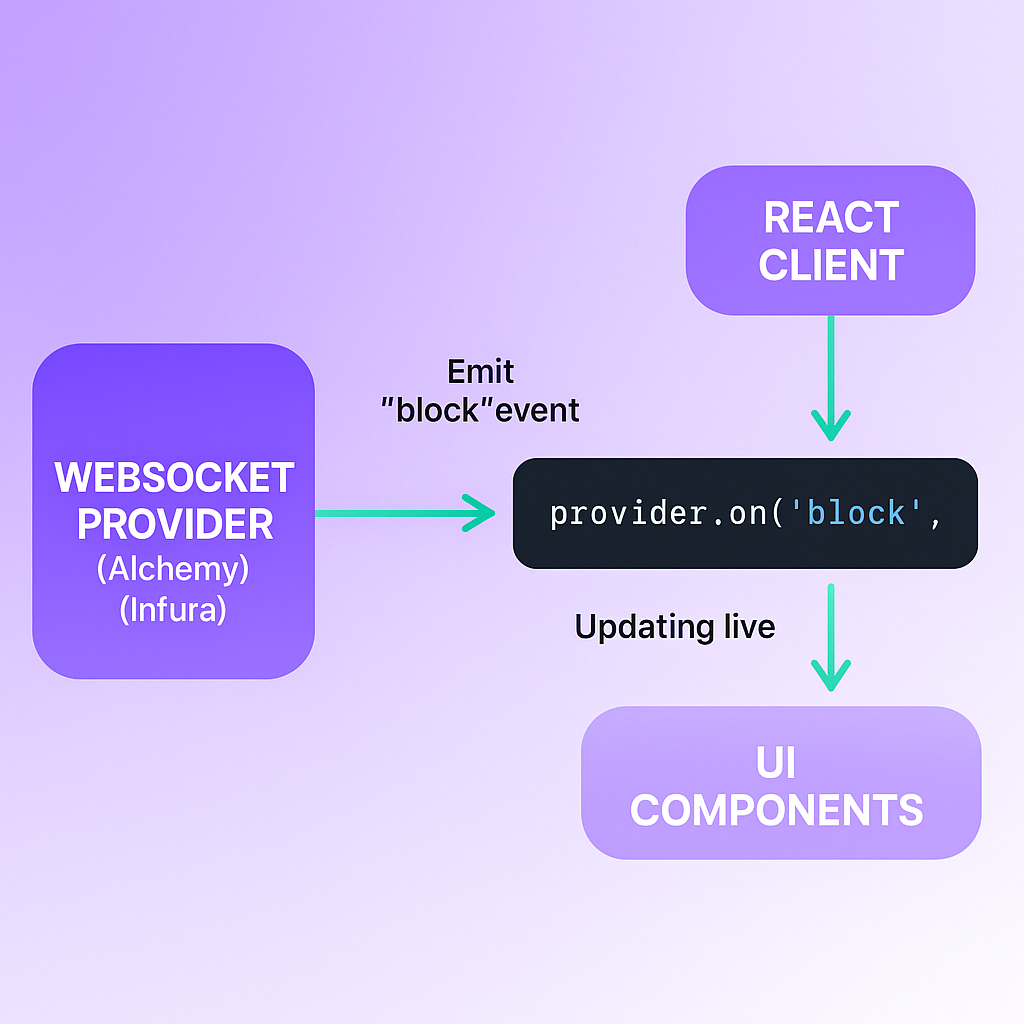
Use WebSocket providers like Alchemy or Infura to subscribe to blockchain events.
Poll light clients carefully: 5–10 seconds for balances, 1–3 seconds for pending transaction status.
Example:
provider.on('block', (blockNumber) => {

// fetch updated balances or prices

});
Performance Optimization Tips
Memoize heavy components with React.memo.
Batch state updates using useReducer or libraries like Zustand.
Virtualize large lists (e.g., trade history) with react-window .
Accessibility and Localization in DeFi UIs
Inclusive design broadens your audience and meets legal standards. DeFi apps often overlook users with visual or cognitive impairments.
Accessibility Standards
Follow WCAG 2.1 AA guidelines : proper contrast, keyboard focus, ARIA labels.
Screen-reader test all transaction flows to ensure clarity before signature.
According to the World Health Organization , over 2 billion people have some form of vision impairment.
Localization Challenges and Solutions
Provide precise translations of critical terms (e.g., “Approve” vs. “Authorize”).
Flag iconography alone can mislead; include language selectors.
Test RTL (right-to-left) layouts for languages like Arabic and Hebrew.
Best Practices and Tools for Building ReactJS DeFi Platforms
Here are proven libraries and frameworks that speed up secure, accessible, real-time DeFi UIs:
Ethers.js / Web3.js: blockchain connectivity
React Hooks libraries (useDapp, wagmi)
Material UI, Ant Design: accessible component libraries
react-i18next: internationalization
react-window: list virtualization
Lodash/fp: safe data transformations
Library/Framework | Purpose | Primary Benefit |
|---|---|---|
Ethers.js / Web3.js | Blockchain connectivity | Ensures correct ABI encoding |
React Hooks (useDapp, wagmi) | React integration | Simplifies state management |
Material UI, Ant Design | Component libraries | Provides accessible, prebuilt UI elements |
react-i18next | Internationalization | Handles language translations and RTL |
react-window | List virtualization | Efficient rendering of large lists |
Lodash/fp | Data transformations | Functional utilities for safe data handling |
Examples of React-powered DeFi apps:
“Interfaces are the bridge between users and smart contracts. A small UX mistake can lead to a large financial loss.” — Protocol researcher Sarah Jamie Lewis ( source )
Tomorrow’s Trends in DeFi UI/UX
Layer-2 adoption: Instant UX with zk-rollups, optimistic rollups.
Cross-chain asset management: Unified dashboards for Ethereum, BNB, Polygon.
AI-driven trade suggestions and risk alerts.
Charting Your DeFi Front-End Journey
You’ve seen how to secure React-based interfaces against crypto-specific threats, stream real-time on-chain data, comply with accessibility and localization standards, and optimize performance under load. Now it’s time to pick your stack, draft your design system, and build the next generation of DeFi experiences.
:format(webp))
:format(webp))
:format(webp))