:format(webp))
:format(webp))
By the time you finish reading, you’ll understand how to harness ReactJS, build prototypes at speed with outsourced teams and AI tools, sidestep common traps, and set up a robust post-launch support plan.
What Is Rapid Prototyping and Why ReactJS Fits the Bill
Rapid prototyping means quickly turning ideas into working models to gather feedback and refine features ( Rapid prototyping definition on Wikipedia ). ReactJS shines here thanks to:
A component-based architecture that lets you build, test, and reuse UI pieces.
A virtual DOM for fast updates without full page reloads.
A rich ecosystem of libraries and community-maintained components, as highlighted in the State of JS front-end frameworks survey .
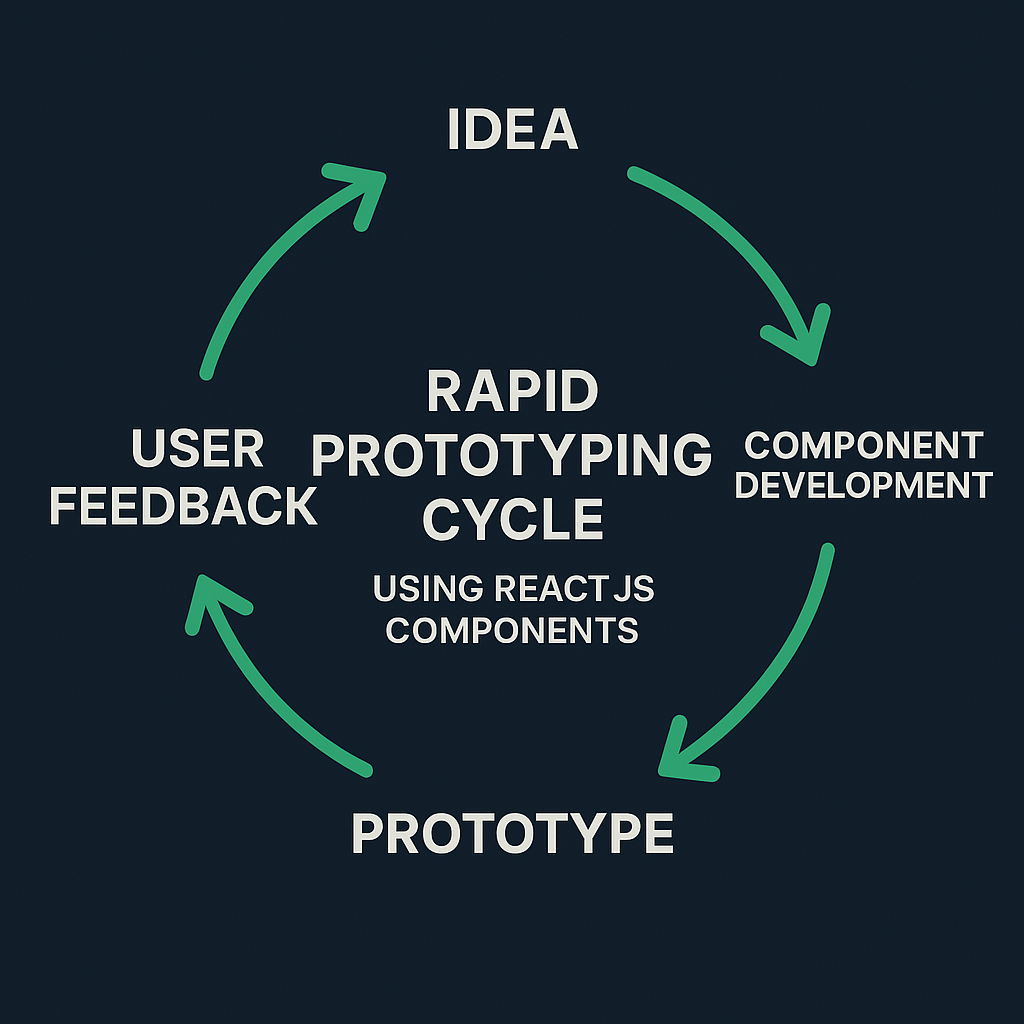
How React’s Architecture Speeds Iteration
Every UI element in React is a self-contained component. Multiple teams can work on different components at the same time, merging them later without stepping on each other’s toes. That parallelization slashes bottlenecks and accelerates your prototype’s time to market.
Benefits of Outsourcing ReactJS for Prototyping
You get more than just extra hands. Outsourcing ReactJS work delivers:
Cost efficiency: tap into regions where developer rates are lower (see Accelerance’s global outsourcing rates ).
Access to specialized skills: find engineers well versed in hooks, Redux, Next.js.
Faster dev cycles: dedicated teams often deliver sprints in days, not weeks.
Focus on core goals: you spend less time interviewing and more time defining features.
Benefit | Description |
|---|---|
Cost Efficiency | Tap into regions with lower developer rates |
Access to Specialized Skills | Engineers versed in hooks, Redux, Next.js |
Faster Dev Cycles | Dedicated teams deliver sprints in days |
Focus on Core Goals | Spend more time defining features, less interviewing |
AI-Powered Tools and Automation
AI assistants like GitHub Copilot can suggest code snippets in real time—studies show they can cut boilerplate coding by up to 30%. Automated testing frameworks such as Jest and Cypress integrate smoothly with React and can run regression suites on every commit.
Common Pitfalls in ReactJS Outsourcing
Every gain comes with risk. Watch out for:
Communication gaps and time-zone mismatches.
Varying quality standards and inconsistent coding styles.
Overhead in project management and QA coordination.
Geopolitical or regulatory shifts that can affect cross-border data flows.
Pitfall | Suggested Safeguard |
|---|---|
Communication gaps and time-zone mismatches | Establish daily/weekly stand-ups and overlapping work hours |
Varying quality standards and inconsistent coding styles | Implement coding standards, code reviews, and CI/CD pipelines |
Overhead in project management and QA coordination | Use centralized project management tools like Jira or Trello |
Geopolitical or regulatory shifts | Adopt ISO 27001/SOC 2 compliance and code escrow practices |
Safeguarding IP and Data
Protect your design and code by requiring:
A guide to confidentiality agreements and IP assignment clauses .
ISO 27001–certified information security processes or SOC 2 audits .
Encrypted repositories (SSH keys, VPN access).
Periodic code escrow to ensure you can retrieve sources.
Choosing the Right Outsourcing Model and Vendor
Your options generally fall into three buckets:
Onshore: same country, easier overlap hours, higher rates.
Nearshore: neighboring time zones, cultural proximity, mid-range costs.
Offshore: widest talent pool, lowest rates, more time-zone management.
Modern Contract Models
Outcome-based and “operate services” agreements tie payment to business results—like user registrations or performance SLAs—instead of hourly rates. That aligns incentives and often delivers sharper focus on key objectives ( Deloitte on outcome-based engagements ).
Best Practices for Successful ReactJS Outsourcing
Define scope, deliverables and KPIs up front.
Set up daily or weekly stand-ups across time zones.
Use project tools (Jira, Trello, GitHub Projects) for transparent tracking.
Implement code reviews and automated CI/CD pipelines.
Break the project into independent components so teams can work in parallel.
Plan for post-launch support—bug fixes, feature tweaks, scaling.
Factor in hidden costs: onboarding, knowledge transfer, legal fees.
Look for partners with migration and modernization experience if you’re upgrading legacy apps.
Building Your High-Performance Ecosystem
Savvy companies now combine multiple outsourcing partners, in-house developers, and AI-augmented squads. This vendor ecosystem approach lets you:
Spin up specialized teams for UI, back end, QA.
Swap partners in and out without disrupting core workflows.
Layer AI-based code generators, test bots, and project assistants across all phases.
Navigating Geopolitics and Regulations
Keep an eye on:
Data residency laws that require certain user data to remain in a country.
Export controls on encryption or cryptographic software.
Shifts in international trade policies that can affect freelancer visas or service costs ( USCIS H-1B specialty occupations ).
Price Tags by Region and Developer Level
Approximate hourly rates (USD):
North America (Senior): $80–$150
Eastern Europe (Mid): $35–$60
South Asia (Junior): $15–$30
Region | Developer Level | Hourly Rate (USD) |
|---|---|---|
North America | Senior | $80–$150 |
Eastern Europe | Mid | $35–$60 |
South Asia | Junior | $15–$30 |
For the latest regional averages, refer to Clutch’s software development rates report . Remember to budget for recruiting, time-zone overlap hours, and knowledge-transfer sessions.
Next Steps: From Prototype to Production
You’ve seen how ReactJS, smart outsourcing, and AI tools combine to give you fast, cost-effective prototypes. Now it’s time to:
Map your feature list and priority.
Choose a vendor with proven ReactJS track record.
Draft an outcome-oriented contract.
Set up your codebase, CI/CD, and security guardrails.
Launch, measure user feedback, and iterate.
Start small, validate key flows, then expand. With a clear plan and the right partners, you’ll turn that first prototype into a polished, scalable app before your competitors even finish spec sheets.
:format(webp))
:format(webp))
:format(webp))