:format(webp))
:format(webp))
Why ReactJS Is Ideal for Building Scalable SaaS Platforms
When you finish this article, you’ll understand why ReactJS powers most modern SaaS solutions—from lightning-fast dashboards to multi-tenant apps—with examples of advanced patterns that top-ranked guides rarely mention.
Performance and Responsiveness
React’s Virtual DOM batches UI updates so your interface stays smooth even when data shifts rapidly.
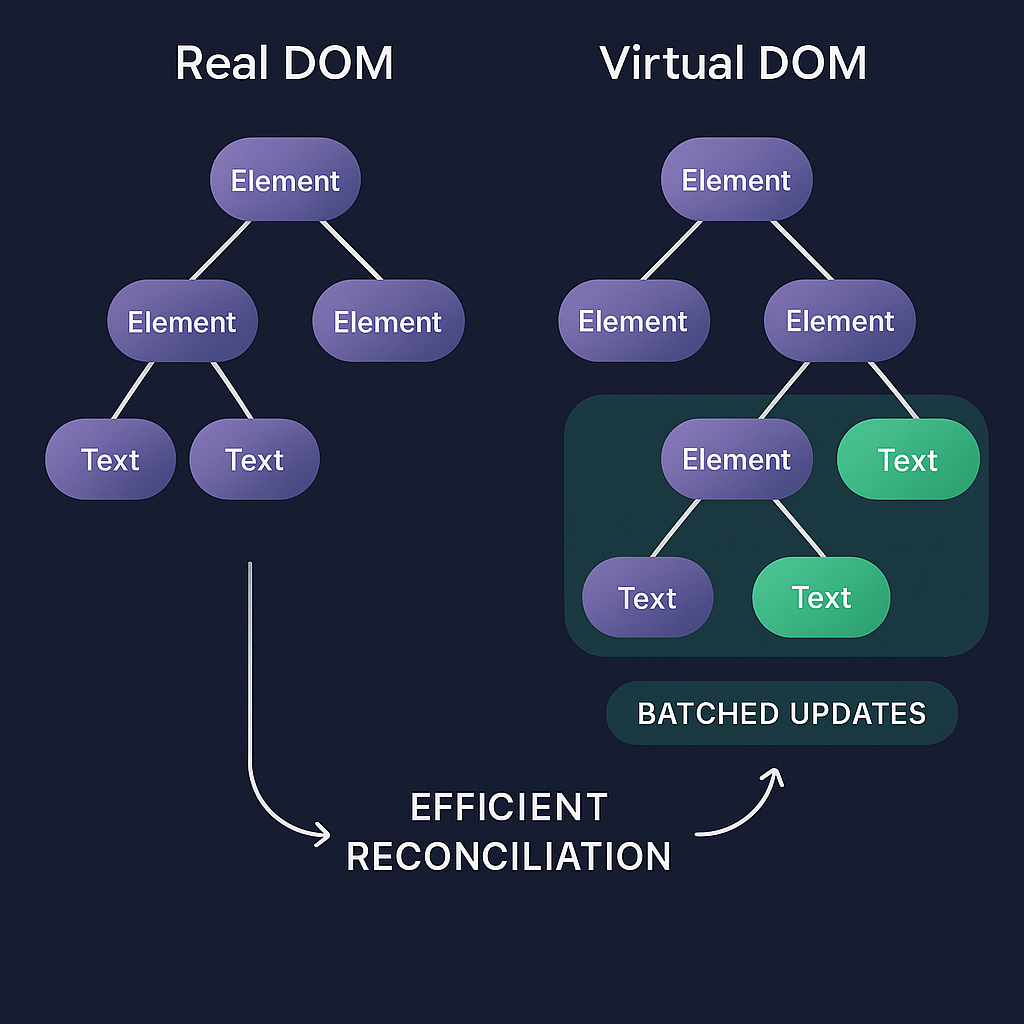
React Fiber, introduced in v16, lets React pause, resume, or abandon work mid-render to keep interactions snappy, as described in this introduction to Concurrent Mode article.
Automatic code-splitting via dynamic `import()` reduces initial bundle size, speeding up load times—see the Webpack guide on code splitting .
“React Fiber is the engine that makes concurrent rendering possible—letting apps stay responsive under heavy load.” – React Team
Component-Based Architecture and Reusability
With React, you build self-contained building blocks that can be shared across your SaaS:
Create a `<Button>` or `<Modal>` once and adapt its style or behavior in dozens of places without rewriting.
Combine components into higher-order constructs for complex flows—user settings, multi-step wizards, data tables.
React Native shares business logic with mobile apps, cutting development time and maintenance costs.
Enforcing Accessibility at Scale
Wrap ARIA attributes, focus management, and keyboard navigation inside your own `AccessibleInput` or `AccessibleMenu` components to ensure every UI piece meets WCAG guidelines .
Ecosystem and Community Support
React’s library of tools, templates, and boilerplates jump-start your SaaS:
React SaaS Boilerplate like Create React App or Next.js + TypeScript templates get you past setup in minutes.
Third-party UI suites (Material-UI, Ant Design) speed up prototyping.
Open-source plugins cover analytics, authorization, charts, and more—no need to reinvent the wheel.
Tool/Template | Category | Description |
|---|---|---|
Create React App | Boilerplate | Quick project setup |
Next.js + TypeScript | Boilerplate | SSR & TypeScript support |
Material-UI | UI Suite | Pre-built React components |
Ant Design | UI Suite | Enterprise-ready components |
Analytics Plugins | Plugin | Integrate analytics |
Authorization Plugins | Plugin | Manage user authentication |
Chart Plugins | Plugin | Data visualizations |
According to the 2023 Stack Overflow Developer Survey , 42.6% of respondents use React as their main web framework.
Scalability and Maintainability
React scales from small teams to enterprise efforts through several patterns:
Micro-frontends architecture
Break your SaaS into independently deployable fragments (user portal, admin console, billing) so each team owns its codebase and release cycle, as outlined in Martin Fowler’s Micro-frontends article .
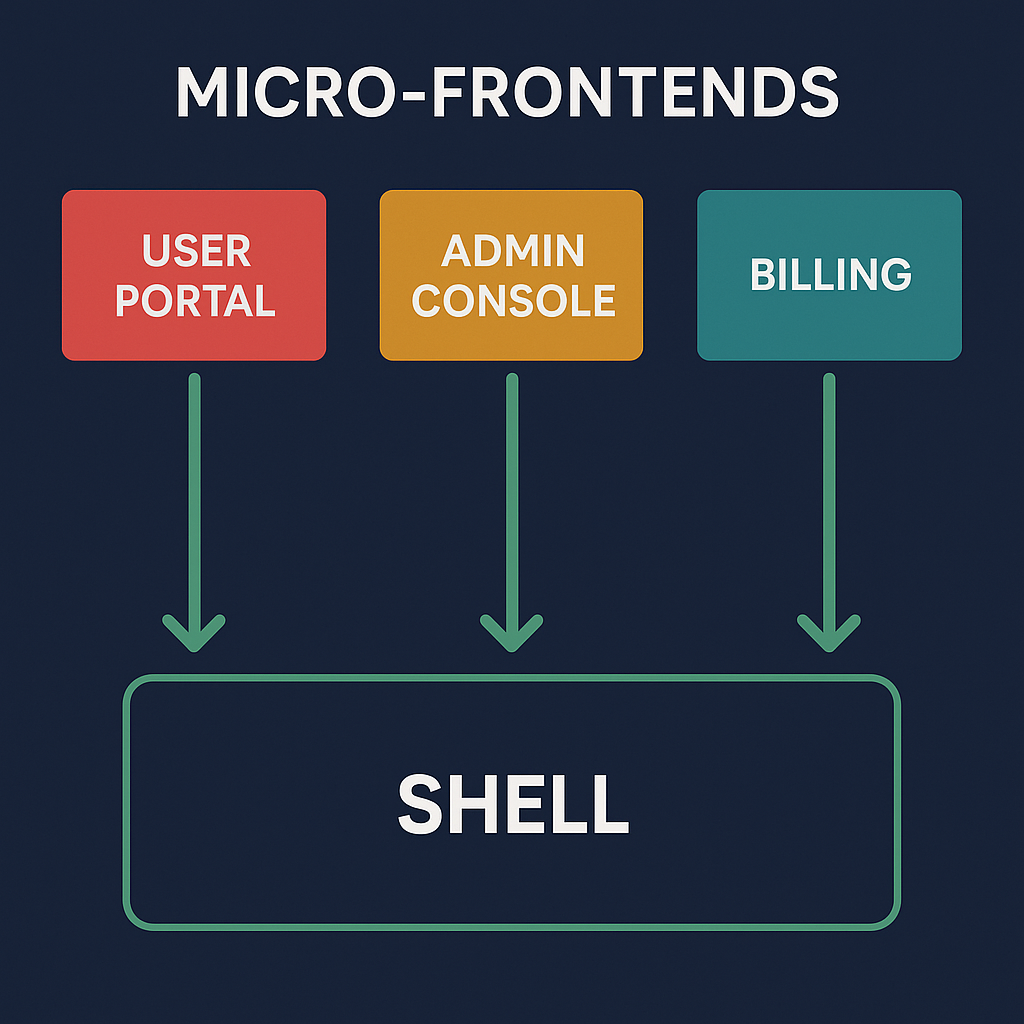
Serverless integration
Pair React frontends with AWS Lambda or Firebase Functions for on-demand compute that grows with your user count.
Advanced state management
Pick the right store for your needs:
- Redux for strict unidirectional flows and time-travel debugging
Recoil for graph-based state and simpler asynchronous selectors
Zustand for minimal boilerplate and fast updates
Library | Use Case | Key Feature |
|---|---|---|
Strict unidirectional data flow & time-travel debugging | Predictable state changes | |
Graph-based state management & async selectors | Simplifies data dependencies | |
Minimal boilerplate & fast updates | Lightweight store API |
Gradual Adoption
You can “Reactify” parts of an existing SaaS—drop in widgets, upgrade a dashboard—without rewriting the whole stack.
SEO-Friendliness and Testability
Getting discovered and staying reliable matters:
Server-Side Rendering with Next.js or Remix lets search engines index your SPA content.
Unit and integration tests with React Testing Library and Cypress guard against regressions and ensure UI behaves as expected.
Common SaaS Use Cases with ReactJS
React shines in scenarios where real-time interactivity and data richness are essential:
Interactive dashboards with live charts and filters
Multi-tenant user and subscription management portals
In-app notifications, collaborative editing, chat modules
Embedded analytics with drill-down capabilities
Next Steps on Your React Journey
You’ve seen React’s speed tricks, ecosystem depth, scaling patterns, and testing best practices. Now pick a starter template, outline your micro-frontend boundaries, and scaffold your first component. With React’s community behind you and these advanced tactics in your toolkit, you’re set to deliver a SaaS product that delights users today and adapts to tomorrow’s demands.
:format(webp))
:format(webp))
:format(webp))